Brainy Planner
Home
How to budget a home renovation and keep track of the real cost
By Brainy Planner · Updated October 14, 2026
Renovation costs drift for a few predictable reasons: the scope grows, quotes leave things out and decisions get changed halfway through. A simple budget you actually update helps you see problems early.
1. Write the scope room by room
List what you want done in each room or area and mark each item as must-have, nice-to-have or later. If money gets tight, the nice-to-haves go first.
2. Get comparable quotes
Ask each contractor to quote the same written scope, and ask what is included and excluded: demolition, disposal, permits, materials, finishes and cleanup. Put the quotes side by side. A cheap quote that leaves out materials is not cheaper.
3. Build the budget in categories
Use lines such as design and permits, demolition, structural, mechanical and electrical, finishes, fixtures and appliances, and cleanup. Write the quoted amount next to each line and leave a column for the actual amount.
4. Add a contingency line
Hidden problems appear when walls open. Add a line for the unexpected. The right size depends on the age and condition of the house and how firm your quotes are; ask your contractor for their view and decide what you can afford.
5. Log every change
When you change something, write it down: what changed, why, who agreed, the cost and any effect on the schedule. Ask for changes in writing before work starts.
6. Track budget versus actual
Update the actual column whenever you pay an invoice. Seeing the gap grow week by week gives you time to adjust, rather than finding out at the end.
7. Record what you did
Keep receipts, paint colours, product names, warranties and contractor details. They help with future repairs and, if you sell, with showing buyers what was done.
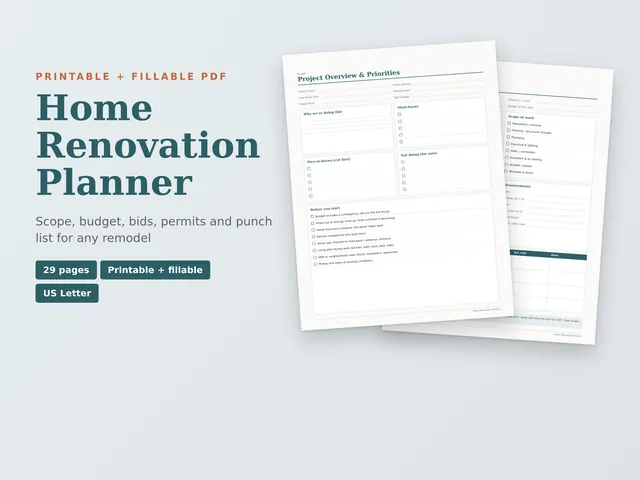
The Home Renovation Planner has room-by-room scope pages, a quote comparison, budget versus actual and a change-order log.