Brainy Planner
Business
How to price your services: costs, time and profit
By Brainy Planner · Updated October 14, 2026
Many new business owners guess their prices or copy someone else's. A short calculation gives you a number you can defend. The example below uses made-up figures purely to show the arithmetic; your numbers will differ.
Step 1: Know your costs
List what it costs you to run the business for a year: software, equipment, insurance, fees, marketing, a share of your home office and anything you pay others. Add what you need to pay yourself, and an amount for taxes, which depend on where you live and how the business is set up (ask a qualified tax adviser).
Step 2: Estimate your billable hours
You will not bill every hour you work; selling, admin, learning and gaps take time. Estimate how many hours per week you can really bill, and multiply by the weeks you expect to work.
Step 3: Work out a minimum hourly rate
Divide the money you need to bring in (costs + pay + taxes) by your billable hours. That is your break-even rate; charging less than this loses money.
Illustration only: if you need 60,000 a year and can bill 1,000 hours, the break-even rate is 60 per hour.
Step 4: Add profit and a buffer
Decide what margin you want above break-even, and add a buffer for jobs that run long. Prices that only cover costs leave nothing for slow months or growth.
Step 5: Price the job, not just the hour
Estimate the hours a job needs, including communication and revisions, multiply by your rate, then add direct costs such as materials or software. Consider fixed prices for work you can scope clearly, and hourly or retainer pricing when scope is uncertain.
Step 6: Check the market and the value
Compare your price with what customers value and with alternatives they have, without copying anyone blindly. If a job is worth a lot to the client, your price can reflect that.
Step 7: Review regularly
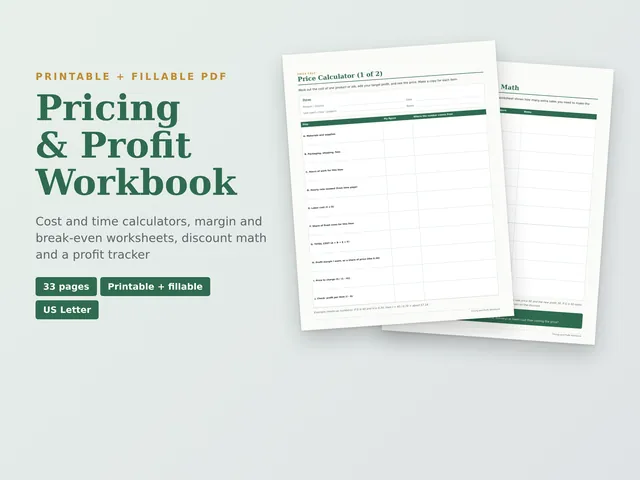
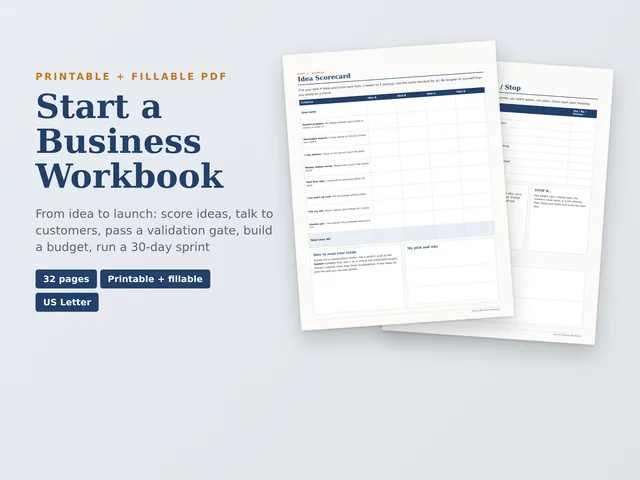
Track the real hours and costs of each job. If jobs keep running over, raise the price or tighten the scope. The Pricing & Profit Workbook has worksheets for each of these steps, and the Start a Business Workbook covers the wider planning.