Brainy Planner
Family
Family emergency information: what to gather in one place
By Brainy Planner · Updated October 14, 2026
This guide is for record-keeping. It is not legal, financial or medical advice. Ask a qualified professional about wills, powers of attorney and similar documents where you live.
In an emergency, family members often need information quickly: who to call, where papers are and what is covered. Gathering it ahead of time saves them stress. Keep the finished binder somewhere safe and tell a trusted person where it is.
People and contacts
- Emergency contacts, family and close friends, with phone numbers.
- Doctors, dentists, pharmacists and other care providers.
- Employer, school and childcare contacts.
- Professionals you work with, such as a lawyer, accountant or financial adviser.
Health and care
- Current medications, allergies and important conditions for each person.
- Insurance details and policy contacts.
- Care instructions for children, dependants and pets.
Home and property
- Where the main water, gas and electrical shut-offs are.
- Home and auto insurance details and agent contacts.
- Vehicle details, and where spare keys are kept.
Money and accounts
- A list of accounts and who to contact at each institution. Do not write passwords or full account numbers in the binder.
- Regular bills and when they are due.
- Subscriptions and automatic payments.
Documents and where they are
- The location of originals: wills, birth and marriage certificates, deeds, titles, insurance policies and tax records.
- Who holds copies and how to reach them.
Wishes and instructions
- Notes on your wishes for care, pets and personal matters.
- Funeral or memorial preferences, if you want to share them.
Keep it current
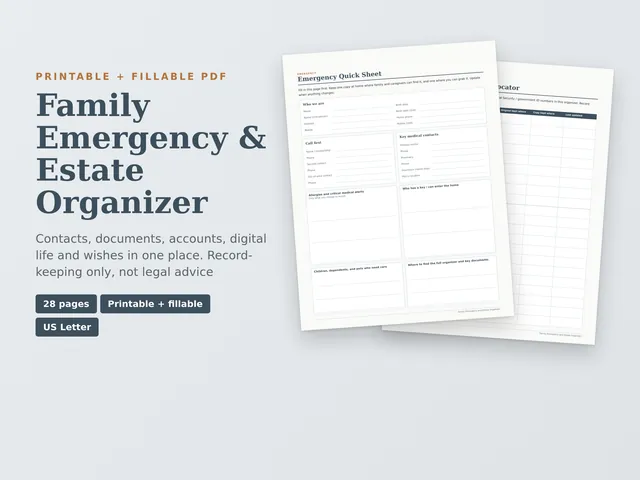
Review the binder once or twice a year and after any big life change, such as a move, a new job or a new baby. The Family Emergency & Estate Organizer provides pages for each of these sections and deliberately leaves out passwords and ID numbers.